


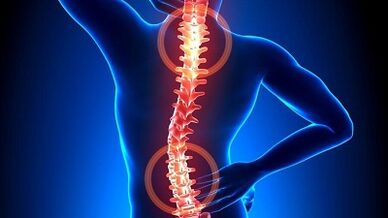
Excessive tension in the back muscles causes a lot of discomfort and pain.Osteochondrosis, which causes a disruption in the structure of the vertebrae and intervertebral discs, leads to significant pinching of nerve endings.Often, pathology is accompanied by deterioration of blood circulation, which causes disturbances in the nutrition of the brain and internal organs.
Osteochondrosis – what is it?

Osteochondrosis is a recurrent disease that occurs in a chronic form and is accompanied by destruction of vertebrae and intervertebral discs.Their tissues are disrupted, which causes a decrease in their elasticity with a subsequent change in shape.There is a gradual decrease in the intervertebral space.This leads to a loss of stability of the spine in the areas where the pathology develops.
The processes of pathological tissue destruction occur against the background of pinched nerve endings directed from the area where the spinal cord is located.As a result, the back muscles are constantly tense.In such a situation, patients complain of back pain and other symptoms.
Based on the peculiarities of the localization of spinal structures affected by degenerative changes, cervical, thoracic and lumbosacral varieties of the pathological process are distinguished.The main sign of the development of osteochondrosis is pain, the intensity and severity of which usually increases during physical activity.
There is also stiffness in movements.In addition, the clinical picture is characterized by the presence of vertebral-type signs - headaches, changes in blood pressure, deterioration of visual function, hearing, etc.
Development mechanism
The development of osteochondrosis is due to the fact that the nucleus pulposus begins to lose its hydrophilic qualities.This semi-liquid structure contains connective tissue fibers and chondroitin, a gel-like substance.During the development of the human body and its growth, processes of reduction of the vascular bed in the intervertebral discs actively occur.Nutrients are provided diffusely, which is manifested by a spontaneous stabilization of the concentration.This characteristic causes difficulties in the complete restoration of cartilage that has suffered damage or excessive pressure on the spine.
Pathological deviations become more pronounced due to disruptions in hormonal levels and human nutrition.Cartilage tissue begins to lack nutrients necessary for normal development.So, the disorders manifest themselves in the form of:
- decreased strength and elasticity;
- Changes to consistency settings and configuration properties.
Against the background of flattening of the intervertebral discs, radial cracks are formed in the fibrous rings.As a result, the intervertebral distance is reduced and the facet joints begin to move.Over time, pathological changes cover the connective tissues related to the fibrous rings and ligaments.
As tissues break down, the immune system produces increased amounts of immunoglobulins.This provokes the development of the process of aseptic inflammation and swelling is formed in the area where the facet joints are located.They also spread to nearby soft tissues.
Due to stretching of the joint capsules, the intervertebral discs lose their ability to attach the vertebrae.Such instability in the position of the spinal structure increases the risk of pinching of nerve roots or compression of blood vessels.This feature is characteristic, for example, of cervical osteochondrosis, which is accompanied by intense verbal symptoms.
Reasons for the development of the disease
The condition of the intervertebral discs can worsen with a decrease in the tone of the skeletal muscles of the spine.Due to irrational and asymmetric muscle work, when an unphysiological body position is maintained for a long time, destruction of cartilage tissue may occur.This violation results from carrying heavy bags on the same shoulder, using soft mattresses and high pillows.
The process of destruction of intervertebral discs is accelerated due to the action of a number of negative factors of an external and internal nature.These include:
- disorders in the functioning of the endocrine mechanism and metabolic disorders;
- infectious pathologies, including chronic ones;
- damage to the spine in the form of compression fractures, bruises;
- regular and prolonged hypothermia of the body;
- diseases of systemic and degenerative-dystrophic type - gout, psoriatic, rheumatoid arthritis, osteoporosis, osteoarthritis;
- smoking and alcohol abuse, which disrupt the condition of the vascular system, impair blood circulation and cause a lack of nutrients in the cartilage;
- insufficient physical development, posture problems, flat feet - these defects increase the load on the spine, since shock absorption will be insufficient;
- obesity;
- genetic predisposition;
- exposure to regular stress.
Symptoms

The main clinical sign of osteochondrosis, regardless of its location (cervical, thoracic or lumbosacral), is pain.In the event of a relapse, the pain is piercing and radiates to neighboring areas of the body.Even with a slight movement, it intensifies.This requires the patient to give the body a forced position in order to minimize discomfort and pain:
- in case of cervical osteochondrosis, it would be better to turn not just one head, but the whole body;
- when the thoracic form of the disease is present, it is difficult for the patient to breathe deeply and, therefore, to avoid acute chest pain, he tries to minimize the depth and frequency of breathing;
- Patients with lumbar disease have difficulty sitting, getting into an upright position, and moving because the spinal nerve is pinched.
As a rule, patients complain of the presence of dull, constant pain and a feeling of stiffness in movements in the morning after waking up.In this case, a differential diagnosis will be necessary to eliminate the risks of developing myositis caused by inflammation of the skeletal muscles of the spine or osteoarthritis.
Aching, pressing pains occur due to compensatory tension in muscle tissues.This condition is necessary to stabilize the area of movement of the spine.Constant mild or moderate pain may also appear with significant stretching of the intervertebral disc, resulting from aseptic inflammatory changes.
Osteochondrosis of a particular localization is characterized by special symptoms:
- With cervical osteochondrosis, pain is felt in the cervical region, in the upper extremities.There is pain in the head and numbness in the fingers.If the disease manifests itself in a severe form, pinching of the vertebral artery may occur.In this case, the patient begins to complain of a significant deterioration in his health.
- Thoracic localization is manifested by sharp, aching pain in the back;there is visceral pain syndrome in the heart region, right hypochondrium and abdomen.Patients complain of numbness, skin paresthesia, difficulty breathing and cracking in the vertebrae.
- Patients with lumbar osteochondrosis complain of pain in the back and lower extremities with increasing intensity during movements.Disorders in the functioning of the genitourinary system, problems with male potency and dysfunctional ovarian disorders are often diagnosed.During remission, pain may decrease.However, exposure to a provoking factor leads to its recovery.
- When mixed osteochondrosis appears, symptoms can appear in several areas simultaneously.This condition is characterized by a more serious course of the disease.
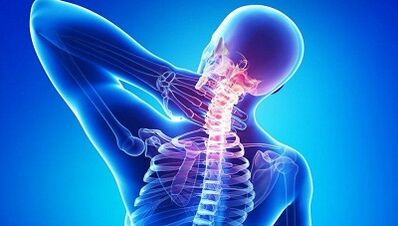
It must be remembered that the movement of the vertebrae and the formation of osteophytes cause compression of the vertebral artery.It nourishes the brain by providing oxygen to its cells.When in a hurry, nutrition is limited and hence the patient has coordination problems, headaches, tinnitus and high blood pressure.
Consequences if not treated
The reason for the complicated course of osteochondrosis is the relatively rapid formation of herniations in the intervertebral discs.Their appearance is associated with a posterior displacement of the spinal structure.This causes rupture of the posterior longitudinal ligament, leading to instability of the position of the disc and protrusion of its individual sections into the spinal canal area.A herniation ruptures when the disc containing the nucleus pulposus enters the canal area.
When pathological abnormalities occur in the spinal structures, the spinal cord begins to be compressed and the patient develops discogenic myelopathy.Symptoms of this disease are associated with numbness and weakness of certain muscle groups in the upper and lower limbs.Paresis, muscle atrophy and impaired tendon reflexes appear.In some cases, problems arise when emptying the bladder and intestines.
The formation of intervertebral hernias is dangerous due to compression of the arteries that nourish the spinal cord.The result of this pathology is the formation of ischemic areas where nerve cells are damaged and killed.The manifestation of the neurological effect is expressed in disturbances in motor function, a decrease in the degree of tactility and trophic disorders.
Diagnosis of the disease

The initial diagnosis is made based on the patient's complaints and existing symptoms.The specialist examines the condition of the spine in different positions, asking the patient to be at rest or in movement.At the next stage, the patient is sent for laboratory diagnostics, which will help clarify the diagnosis or refute it.
Research methods used include:
- X-ray– allows a complete examination of the spine with assessment of the condition of the vertebrae, existing disorders in the form of growths, curvatures.The specialist will be able to determine the intervertebral spaces and the condition of the holes.To accurately identify osteochondrosis localized in the thoracic or cervical region, a two-stage radiographic examination is carried out.In the first stage, the patient lies on his side, and in the second, directly on his back.
- MRI or CT tomography methodprovide very informative data, which allows the vertebrae to be studied in detail without interference from the organs covering them.The image shows the nerves and the vascular system.MRI helps identify signs of many spinal diseases and the location of damage.The scanner visualizes hernias and determines possible deviations in the structure of the spine.
- Laboratory examinationto assess the condition of the blood and its main parameters.Allows you to clarify the diagnosis and determine the possibility of developing concomitant diseases.
In many cases, as a result of examinations, doctors diagnose the presence of certain underlying diseases that are potentially dangerous due to their complications.We speak for example of hernias, protrusion, radiculitis.Correct diagnosis of problems helps to treat osteochondrosis more effectively.At the same time, the disease itself, in the early stages of development, is disguised as symptoms of other diseases.
Therapeutic process
Osteochondrosis is treated conservatively or surgically.The choice depends on the severity of the disease, its neglect, the level of tissue deterioration and the causes of its occurrence.
It is important to remember that it is not possible to completely cure osteochondrosis, since there are no medications that can completely restore the discs and vertebrae.The therapeutic effect is aimed at inhibiting the destructive process and increasing the duration and stability of remission.
For symptomatic treatment, chondroprotectors based on chondroitin or glucosamine sulfate are used.
The effectiveness of the therapeutic process using chondroprotectors has been confirmed clinically on the basis of long-term tests.If you take these drugs for a long time (from 3 months), partial restoration of cartilage and other connective-type elements - the ligamento-tendinous apparatus, bursa, is observed.

The accumulation of glucosamine and chondroitin in the intervertebral discs causes an analgesic, anti-edematous and anti-inflammatory effect.There is therefore a real opportunity to optimize the dosage of NSAIDs, glucocorticoids and muscle relaxants.You can count on a reduction in the medication burden for the patient.
The effectiveness of chondroprotectors is determined by the regularity of their use.Otherwise, there will be no results.Ineffectiveness is also recorded in the treatment of osteochondrosis of the 3rd degree, accompanied by significant destruction of cartilage.
The following groups of drugs can be used to relieve pain:
- Non-steroidal anti-inflammatorieshelp eliminate inflammatory soft tissue disorders caused by vertebral displacement.NSAIDs are effective in reducing pain, swelling and stiffness.
- Drugs from the glucocorticosteroid group– blockages are generally used in combination with an anesthetic.They are able to relieve pain, restore the functioning of the immune mechanism and exert an anti-exudative effect.
- Muscle relaxers.They are effective in combating muscle spasms due to nervous conflict.They help relax skeletal muscles and block polysynaptic spinal reflexes with an antispasmodic effect.
- External products with a heating effect.Irritation of the receptors of the subcutaneous tissue with activation of blood flow is provided by special gels and ointments.These drugs have analgesic and anti-edematous effects.
Symptoms of vertebrogenic type, which appear due to the localization of pathology in the cervical or thoracic region, can be eliminated using medical means to activate blood flow.Nootropics and drugs aimed at improving microcirculation are also prescribed.In some cases, it may be necessary to take antidepressants, as well as pharmaceutical drugs with anticonvulsant effects.
When treating osteochondrosis, they also resort to physiotherapy.UHF therapy, magnetotherapy, laser therapy, reflexology, massage, exercise therapy, hirudotherapy as well as swimming and yoga can be prescribed.If conservative treatment is ineffective, surgical intervention is performed by microdiscectomy, enhancement by disc puncture, laser reconstruction or implant replacement.